Hidden costs to avoid with Sudbury rubbish removal
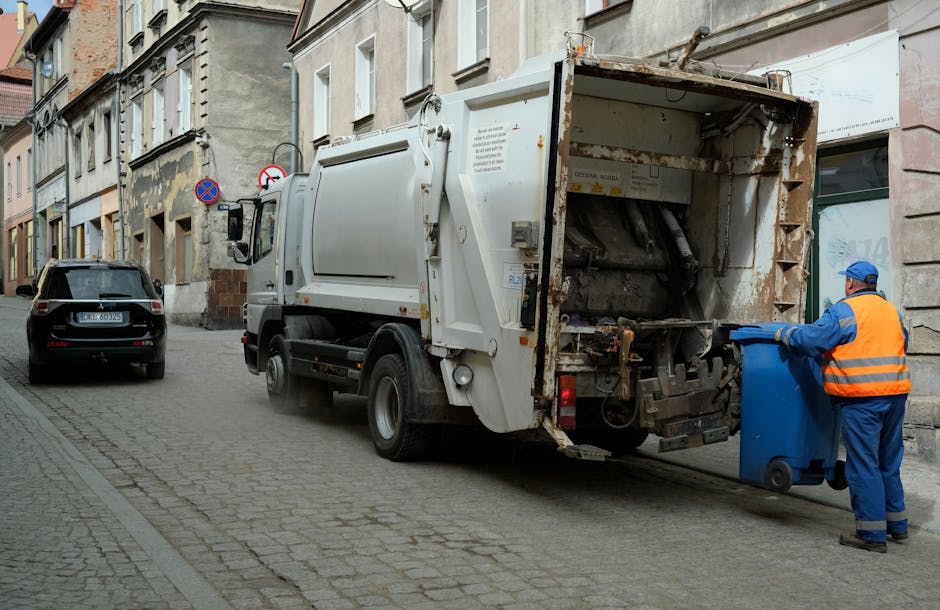
If you are comparing rubbish removal in Sudbury, the price you see first is not always the price you end up paying. That is the awkward bit, really. A quote can look neat and affordable, then extra charges creep in for labour, access, sorting, restricted items, or disposal conditions you did not realise mattered. This guide explains the hidden costs to avoid with Sudbury rubbish removal, so you can book with your eyes open and avoid the classic "why did the bill jump?" moment.
Whether you are clearing a loft, dealing with builders' rubble, emptying an office, or simply getting rid of awkward bulky items, the same principle applies: understand what is included, what is excluded, and what might change on the day. Let's get into the details properly.
Why hidden costs matter
Hidden costs matter because rubbish removal is one of those services where the final price depends on a chain of small decisions: how much waste there is, what type it is, where it is stored, how easy it is to collect, and what happens after loading. Miss one detail and the quote can shift. Sometimes only a little. Sometimes enough to sting.
In practical terms, hidden charges often appear when a job is more complicated than it looked in the photos or over the phone. A front room full of soft furnishings is one thing; a damp basement full of mixed waste, paint tins, broken tiles, and a fridge is another. Same "clearance" label. Very different cost profile.
There is another reason this matters: once you are in the middle of a clear-out, you are less likely to renegotiate, compare options, or push back on extras. That is where people get caught. You are busy, the house is half empty, the builders are waiting, or the office needs the space back by Friday. Hidden costs thrive in rushed moments. Truth be told, that is their favourite environment.
Expert summary: The cheapest Sudbury rubbish removal quote is only good value if it genuinely includes the labour, access, waste type, and disposal route your job needs. If any of those are vague, the final bill can rise quietly.
If you are planning a broader clearance, it may help to look at related services such as waste removal or more specific jobs like house clearance, office clearance, and builders waste clearance, because the cost structure changes depending on the material and the setting.
How rubbish removal pricing usually works
Most rubbish removal quotes are built from a few core variables. Once you understand these, the hidden costs become much easier to spot.
1. Volume or weight
Some services price by volume, often based on how much space the load takes in the vehicle. Others may factor in weight, especially for heavy inert waste like rubble, soil, or tiles. If your load is light but bulky, the pricing logic can be very different from a compact but heavy job.
2. Labour time
If items are already by the curb, the job may be quick. If crews need to carry things down stairs, through narrow halls, or around a garden path that is a bit of a maze, labour time can increase. Stairs, distance, and awkward handling all matter.
3. Access conditions
Access is one of the most underestimated factors. Can the vehicle park close by? Is there a lift? Is there a long carry from the top floor? Is the road tight or restricted? A job that looks simple on paper can become a manual handling job with extra time attached.
4. Waste type
Not all waste is equal. Mixed household rubbish, furniture, white goods, garden waste, builders' waste, and specialist materials each have different handling and disposal implications. Items such as fridge and appliance removal, mattress and sofa disposal, and furniture disposal may need specific processing, and that can affect price.
5. Disposal destination and restrictions
Where waste ends up matters. Reuse, recycling, transfer, and disposal all have different costs. Some materials are cheaper to process if separated properly. Others cost more because they require care, sorting, or special handling. A good provider should explain this in plain English, not hide behind jargon.
One small but important point: if your provider says "all waste included," ask what that really means. Does it include labour only? Disposal fees? Congestion or parking? Stair carries? Restricted items? It sounds obvious until it does not.
Key benefits and practical advantages
Spotting hidden costs early is not just about saving money. It also makes the whole process calmer and faster. A clear quote leads to fewer awkward calls, fewer delays, and fewer disputes on the day. And nobody enjoys arguing about a bin bag at 7:30 in the morning. Nobody.
- Better budgeting: you can plan for the real total rather than a teaser price.
- Fewer surprises: fewer add-ons appearing after the team arrives.
- Faster clearance: the crew knows what to expect, which helps them work smoothly.
- Better comparison: you can compare like for like instead of apples and pears.
- Improved safety: clearer details help avoid rushed handling of heavy or unsafe items.
There is also a trust benefit. When a company is upfront about pricing, it tends to be more organised elsewhere too. That does not guarantee perfection, of course, but in our experience it is usually a decent sign. A provider that explains extra charges clearly is more likely to be reliable when the van turns up, the loaders work, and the paperwork matters.
If sustainability is part of your decision, it can be worth asking how items are sorted for recycling or reuse. A provider with a sensible approach to recycling and sustainability will usually explain which materials can be diverted and which must go to other streams.
Who this is for and when it makes sense
This advice is for anyone arranging rubbish removal in Sudbury who wants to avoid being caught out by extra charges. That includes homeowners, landlords, tenants, small businesses, tradespeople, letting agents, and anyone dealing with a one-off clear-out.
It makes especially good sense if your job has any of the following features:
- mixed waste rather than one clean material type
- heavy items like rubble, appliances, or old flooring
- stairs, narrow access, or long carry distances
- urgent time pressure
- you are clearing from a flat, loft, garage, shed, or basement
- you are not sure whether items count as restricted or specialist waste
A typical example is a flat clearance where a few bulky pieces look harmless, but then the crew finds broken shelving, packaging, an old mattress, and bags of random odds and ends. That mixture can move a job out of the "quick and simple" category pretty fast. If the property setup is tricky, pages like flat clearance, loft clearance, garage clearance, and garden clearance are relevant because each setting brings its own practical complications.
Step-by-step guidance
Here is the sensible way to avoid hidden costs before, during, and after booking. Keep it simple. That is the trick.
- List everything you need removed. Go room by room if needed. Include the awkward bits: the broken table, the old underlay, the damp boxes, the shed shelves, the appliances.
- Separate clearly different waste streams. Furniture, green waste, rubble, metal, and general junk should not be treated as one vague pile if you can help it.
- Measure access honestly. Count floors, estimate carry distance, and note if parking is tight. If there is a lift, mention whether it is working and large enough for bulky items.
- Ask what the quote includes. Specifically ask about labour, loading, disposal fees, waiting time, heavy items, restricted materials, and any minimum charges.
- Check whether the price is fixed or estimated. A fixed quote is usually easier to manage. An estimate can change if the load differs from the description.
- Ask about item categories that cost more. Fridges, mattresses, sofas, confidential materials, and hazardous waste often fall into separate handling rules.
- Confirm the terms before collection day. You want the practical details settled in advance, not in the driveway while someone is already lifting.
- Keep records of the agreement. An email or booking confirmation helps if there is later disagreement.
If your job includes specialist materials, do not bury that information in the small print of your own notes. Say it plainly. For example: "There is one fridge, two mattresses, some mixed household waste, and access is via two flights of stairs." That one sentence can prevent a lot of confusion. Honestly, it saves everyone time.
Expert tips for better results
Here are the habits that tend to save people real money and stress.
Be suspicious of ultra-light quotes with no detail
If the price is dramatically lower than the others but includes very little explanation, there is often a reason. Sometimes it is a genuine promotion. Sometimes it is not. Ask yourself: what exactly is covered?
Use photos, but do not rely on them alone
Photos are helpful, especially for bulky furniture or a messy garage. But a photo can hide depth, weight, and access issues. A staircase in the shot looks harmless; the long walk to it does not. So send images, yes, but also add a short written description.
Ask about separation before collection
Sometimes mixed waste can be sorted on site, but not always without extra labour. If you can separate timber, metal, green waste, and general clutter beforehand, that may reduce costs. It also makes recycling easier, which is a nice side effect.
Watch for minimum-load charges
A lot of jobs are priced with a minimum. That can be fair, because it covers travel, labour, and vehicle use. But if you only have a handful of items, it is worth asking whether you are close to the minimum or better off grouping the job with another clear-out.
Plan around timing
Urgent same-day jobs can carry a premium. If the rubbish is not causing a problem right now, booking a day or two ahead can sometimes help. Not always, but often enough to be worth asking.
A small human aside: there is always that one cupboard where everything becomes "miscellaneous." It is almost a law of domestic life. Unfortunately, "miscellaneous" is not a very helpful waste category when pricing is involved.
Common mistakes to avoid
Most hidden costs come from a handful of predictable mistakes. Avoid these and you are already ahead of the game.
- Describing the waste too broadly. "Just a bit of rubbish" is not enough.
- Forgetting access details. Stairs, parking restrictions, and long carries matter more than people think.
- Assuming all bulky items are priced the same. Sofas, mattresses, and appliances often differ.
- Mixing hazardous items in with general waste. That can create safety and pricing issues.
- Not checking if labour is included. Some quotes look cheap until lifting starts.
- Ignoring disposal conditions. If the waste must be sorted, bagged, or loaded separately, the price can change.
- Rushing to book the first quote. A little comparison usually pays off.
One especially common error is assuming a skip and a man-and-van clearance are interchangeable. They are not. If you are unsure, it helps to read the rules around what can go in a skip because restricted items, mixed loads, and street placement can all affect the final cost of that route as well.
Tools, resources and recommendations
You do not need complicated tools to avoid hidden costs. A few simple things make a real difference.
- Phone camera: take wide shots of each room, plus close-ups of awkward items.
- Notebook or notes app: list special items, access issues, and deadlines.
- Tape measure: useful for bulky furniture, appliances, and narrow hallways.
- Basic sorting bags or boxes: helpful for separating small items before collection.
- Booking confirmation: keep the agreed scope and price in writing.
As for recommendations, choose a provider that is transparent about pricing and clear about payment. Pages such as pricing and quotes and payment and security are useful signals that the business is thinking about the customer journey properly, not just the sale.
If you are dealing with anything unusual, such as confidential paperwork or an office clear-out, look at services like confidential shredding and business waste removal. The wrong disposal route can be more expensive later, not just on the invoice but in the time it takes to correct it.
Law, compliance, standards, or best practice
Without getting overly legal about it, rubbish removal in the UK sits inside a framework of duty of care, safe handling, and proper disposal. In plain English, waste should be described accurately, loaded safely, transported responsibly, and taken to an appropriate facility or processing route.
That matters because hidden costs often appear when waste is misdescribed. For example, if something turns out to be hazardous, contaminated, or heavier than expected, the provider may need to change the handling method. That is not just about money. It is about safety and compliance too.
Best practice is straightforward:
- be honest about the type and condition of waste
- separate hazardous or specialist items where possible
- check that the provider has suitable insurance and safety procedures
- avoid mixing items that require very different disposal routes
- keep clear records of what was agreed
If safety and accountability are important to you, it is sensible to review insurance and safety and health and safety policy. For items that need special handling, hazardous waste disposal should be treated separately rather than casually bundled into a general clearance.
To be fair, most reputable operators want to get this right. The issue is usually not bad intent. It is vague information at the start. Clear information avoids awkwardness later on. Simple, but true.
Options and comparison table
Different rubbish removal options suit different situations. Here is a practical comparison to help you decide what feels best for your job.
| Option | Best for | Hidden cost risk | Useful note |
|---|---|---|---|
| Man and van rubbish removal | Mixed household waste, furniture, quick clear-outs | Labour, access, and restricted items | Good when you want loading handled for you |
| Skip hire | DIY jobs, renovation waste, longer projects | Permit needs, overfilling, unsuitable materials | Works best when waste is predictable and sorted |
| Specialist clearance | Offices, hazardous items, appliances, bulky furniture | Special handling and disposal fees | Often the safest choice for awkward or regulated waste |
If you are comparing routes, it can also help to look at the type of clearance you actually need rather than the word "rubbish" alone. For example, furniture clearance may be more suitable than a general waste job, while home clearance or house clearance can suit larger domestic projects where the amount of material is broad and varied.
Case study or real-world example
Here is a realistic example based on a common sort of job. A homeowner in Sudbury is emptying a spare room, a shed, and half a garage before some decorating starts. On the surface, it looks like a straightforward clearance: old chairs, cardboard, a broken chest of drawers, and a few bags of general waste.
But then the details start to matter. The garage is down a side passage with limited parking. There is a fridge in the corner. A mattress is tucked under shelving. Some of the waste is damp from leaks, and there are a couple of old paint tins. Nothing dramatic. Just enough complexity to change the picture.
A vague quote would probably miss at least one of those factors. A better approach is to describe the job item by item, explain the access, and ask what counts as extra. In this example, the final bill is likely to be more accurate from the start, and the job will probably run more smoothly too. The crew arrives knowing what they are carrying, where they are going, and what needs special care. Less back-and-forth, fewer sighs, no mystery surprises. Nice for everyone involved.
That is the real lesson: hidden costs are rarely hidden because the provider is trying to trick you. More often, they are hidden because the job was not described clearly enough at the outset. Small difference, big impact.
Practical checklist
Use this checklist before you book. It takes a few minutes and can save you a proper headache later.
- Have I listed every item that needs removing?
- Have I separated furniture, appliances, rubble, garden waste, and general rubbish?
- Have I mentioned stairs, narrow access, parking limits, and carry distance?
- Have I asked whether labour, loading, and disposal are included?
- Have I checked whether any items are restricted or classed as specialist waste?
- Have I confirmed whether the quote is fixed or estimated?
- Have I kept the booking details in writing?
- Have I asked how payment works and whether any extras can be charged on the day?
- Have I compared the quote with at least one other option if the job is not urgent?
- Have I chosen the right clearance type for the job rather than just a generic service?
If you can tick most of those boxes, you are in good shape. Not perfect, maybe, but solid. And solid is what you want when there is a van outside and a pile of clutter waiting by the door.
Conclusion
Hidden costs to avoid with Sudbury rubbish removal are usually easy to sidestep once you know where they come from. The big ones are almost always the same: vague descriptions, poor access details, mixed waste, special items, and assumptions about what "all included" really means. Get those cleared up early and you will make better choices, save money, and avoid that slightly stressful moment when the bill is suddenly taller than expected.
The smartest approach is simple: describe the job clearly, ask direct questions, compare like for like, and choose a provider that explains pricing without fuss. That is how you get a smooth clearance rather than a surprise.
If you are ready to sort the job properly, start with a clear quote and a straightforward plan.
Get a free quote today and see how much you can save.
And if there is one final thought to leave you with, it is this: a well-planned clearance feels lighter in every sense, not just on the invoice.
Frequently Asked Questions
What are the most common hidden costs in rubbish removal?
The most common hidden costs are usually labour extras, difficult access, restricted items, heavy waste, and disposal charges that were not made clear at the quote stage. Mixed waste can also raise the price if it needs more sorting than expected.
How can I avoid surprise fees with Sudbury rubbish removal?
List every item clearly, mention stairs or parking issues, ask exactly what the quote includes, and get the agreement in writing. If anything is unusual, say so upfront. That one bit of honesty tends to save money later.
Are quotes for rubbish removal usually fixed?
Sometimes yes, sometimes no. A fixed quote is easier to manage, but some companies use estimates that can change if the actual load differs from the description. Always ask which one you are getting.
Do bulky items cost more to remove?
Often they do, especially if they need extra handling or special disposal. Sofas, mattresses, fridges, and white goods can be priced differently from general bags of waste because of their size and processing needs.
Why does access affect the price?
Because access affects labour time and handling effort. A ground-floor load with parking nearby is much quicker than carrying items down two flights of stairs or through a long garden path. Fair enough, really.
Is skip hire cheaper than rubbish removal?
It depends on the job. Skip hire can work well for predictable DIY waste, while rubbish removal is often better for mixed items, bulky furniture, or properties with awkward access. The cheaper option is not always the better value.
What should I ask before booking a clearance?
Ask what is included in the price, whether labour and disposal are covered, how restricted items are handled, whether the quote is fixed, and whether there are any extras for stairs, waiting time, or same-day booking.
Can mixed waste increase the final bill?
Yes. Mixed waste often needs more sorting and may include items with different disposal routes. Separating what you can beforehand is one of the easiest ways to keep costs under control.
Do I need to mention hazardous items?
Absolutely. Hazardous or specialist waste should never be hidden inside a general clearance description. It may require a separate handling process, and failing to mention it can lead to extra cost or collection problems.
How do I compare rubbish removal quotes properly?
Compare the same things in each quote: volume, labour, access, waste type, disposal fees, and any exclusions. A low headline price is not much use if it leaves out the parts your job actually needs.
What if I only have a small amount of rubbish?
Small jobs can still carry a minimum charge, so it is worth checking whether the price makes sense for your amount of waste. If the job is tiny, you may want to group it with another clear-out or ask for the smallest available collection.
Where can I learn more about what rubbish can be taken away?
It helps to review service pages like waste removal and what can go in a skip so you understand how different waste types are usually handled. That makes it easier to describe your job accurately.